This post has been sitting in my drafts for weeks. There’s been a lot going on, but not much of it has been running. There has been movement, and I’m on the upswing in terms of energy and endurance.
I’m currently ‘on hiatus’ between chemo — my last infusion was on 13 August — and the beginning of radiotherapy, which should start in late September. Stll, a treatment hiatus doesn’t mean I’m immune from appointments and scans.
Where we left things was just after my fourth infusion. Both my medical oncologist and I were surprised that my post-chemo CT scan was scheduled before I finished all six rounds. Fortunately, the timing worked in our favour and scan results were available for my regular Monday pre-infusion appointment.
The news was largely ‘unremarkable.’ My bilateral lung nodules were still there, although now most were hollow, likely due to treatment. We’ll watch and monitor those. My surgeon is not fussed about them, saying the increase in lung nodules as a consequence of Covid-19 (I had it 18 months ago) makes their presence unsurprising. The better news was no bone lesions and no lymphadenopathy — no lymph node concerns is very good news.
My blood work was less exciting. Chemotherapy-induced neutropenia (CIN) —or low neutrophils—is a common side-effect. My medical oncologist assured me 1.2 was safe to proceed with treatment, but added a Lapelga shot after my fifth infusion to ensure my counts rebounded. For my sixth infusion, we followed it with three Grastofil injections. Both these meds had the effect of shortening the timeline for low neutrophils but amplifying the bone and joint pain side effects. It stayed that way for four days each cycle. I’m glad that’s behind me.
It really is never just one thing
In parallel to my last two infusion cycles, we’ve been further investigating my thyroid. And I’ve learned a new word — Otolaryngology — what we all know as ENT. An ultrasound revealed the nodules are on both lobes of my thyroid and one on the right side is ‘suspicious’ so now I’ve got an appointment with an ENT oncology specialist in early October. It may mean another surgery.
All this has led to me to research the link between thyroid and gynecological conditions. It turns out to be not uncommoon, and I’m looking forward to talking with my team about how my symptoms might be related when we meet next week. That appointment is to check that my blood counts — and with it my immune syatem — are recovering post chemotherapy.
What comes next: radiotherapy
The main event since finishing chemo treatment has been preparing for radiotherapy. Almost two weeks ago now I had an initial consult with my radiation oncologist, who will supervise this next treatment phase. I liked him immediately and we made a connection that he and I have both lived and worked in Halifax before making Montréal home.
At that consult, we reviewed my treatment plan — it will be 25 EBRT sessions delivered 5 days/week over five weeks and one brachytherapy session. The goal is to reduce the likelihood of local, or pelvic, recurrence. Being the data nerd that I am, I asked what a measure of success might be? Stage IIIa endometrial cancer is prone to recurrence, so I was happy that he put me in the high 70s to get to five years without recurrence. Of course, those are all just numbers but its a useful baseline as we move forward through this process.
This week, what should have been new CT scans on which to base my radiation treatment ended up being ‘adjourned’ to next week. I came home with new diet instructions and meds that will — hopefully — help me find the right balance. To minimize side effects from radiation, you want a comfortably full bladder and a relatively empty bowel. The two combined help move these organs out of the way. Except I eat mostly vegetarian, including a lot of raw veggies, beans, nuts and seeds — all things that create gas — what you don’t want in the treatment field.
So for now, I’ll be following a low-residue diet for the next couple of months, and supporting that with daily simethicone to reduce gas, along with drinking 2-3 litres of water/day. The goal is to create optimal conditions that can be reprodued each day of treatment. It will take practice, but the team I met with on Friday assured me its doable. Mostly I appreciate their focus on delivering what will be an aggressive treatment plan with the least side effects.
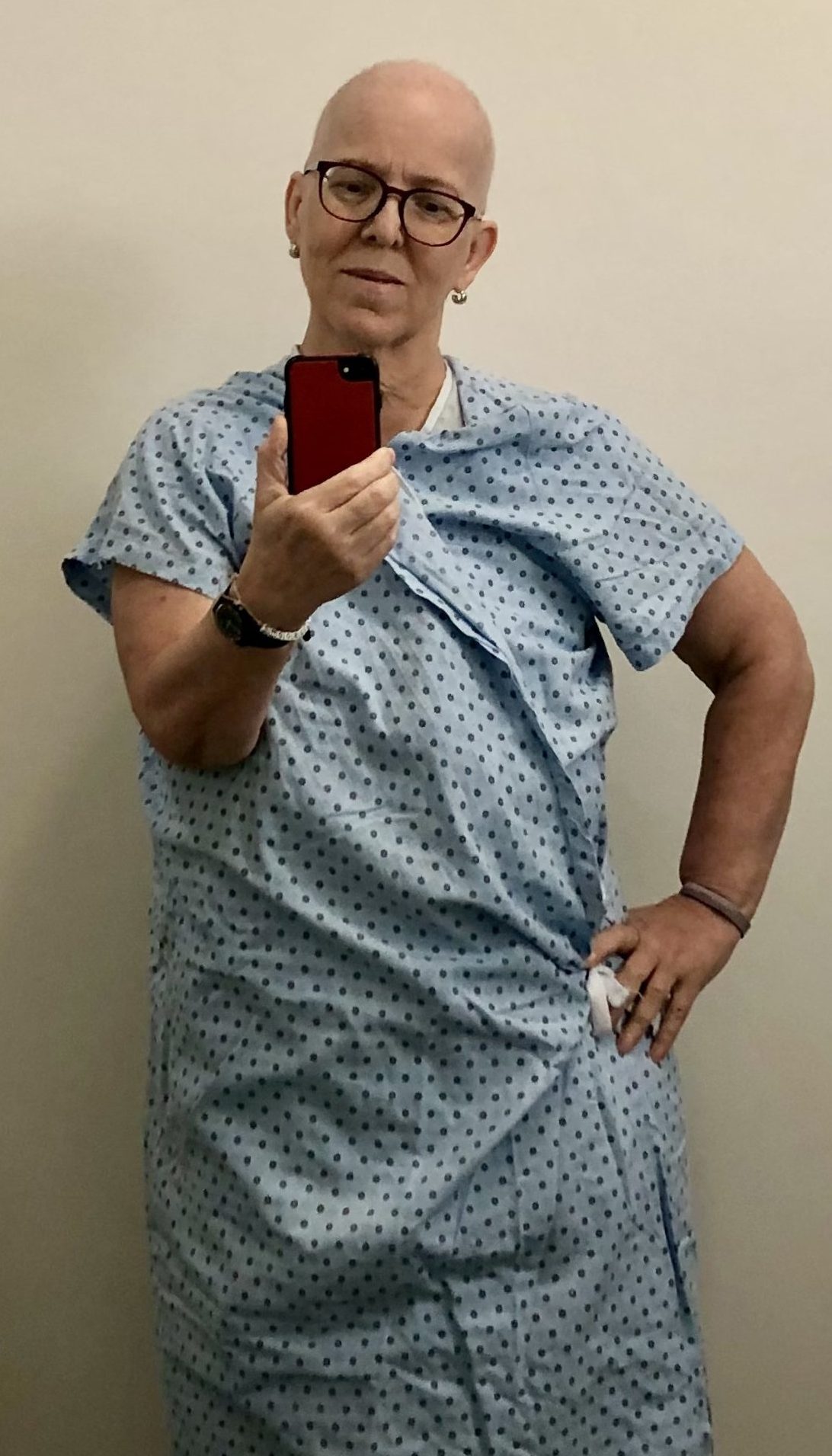
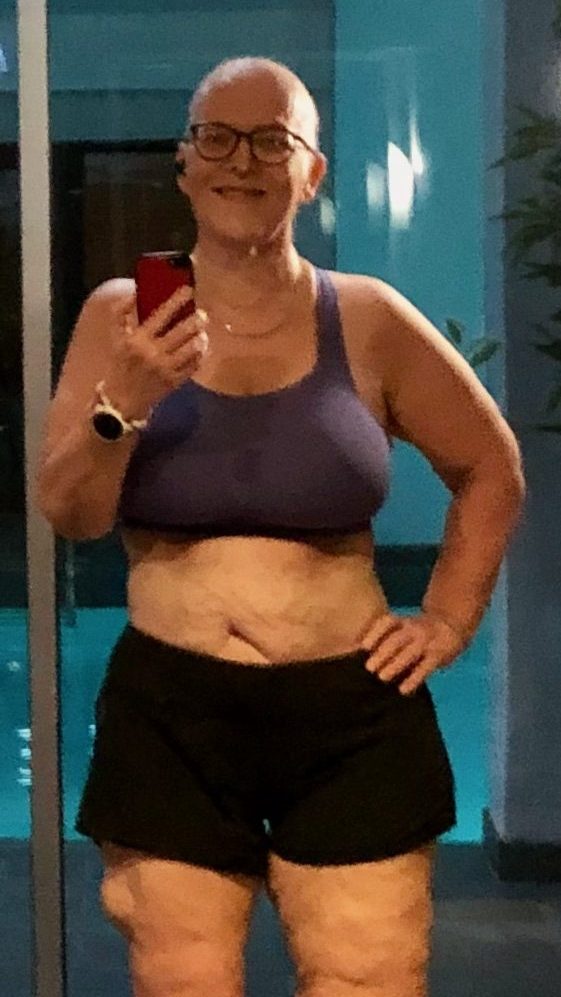
Two sides to the same week. Left: Prepping for scans, and right: after 30 minutes at the gym.
And now, running?
Where does all this leave me with my running habit? I’ll admit, the last two chemo cycles took a lot, and there hasn’t been any serious running happening for awhile. One week, I settled for 1 mile of consistent walking, and this last week I’ve been upped that to 30 minutes. I’ve been focussed on increasing my time on feet and now that I have better energy, will be adding back some running intervals this week. A positive sign is my resting heart rate is coming back down to normal levels for me.
I still have an eye on racing at the end of September during Montreal Marathon weekend. The 10k is my target, but we’ll see how things go. The 5k has an equally lovely medal!
In the meantime, I’ll be over here figuring out what grocery shopping and meal planning looks like for a low-residue diet that still fuels training.
 Running from hysteria
Leave a comment