I’m training for my first post-treatment 5k race at the end of April, and it has me thinking about food, fuel, and nutrition. For longer races, part of training is taking on board fuel you’ll use during a race, but this time around, my focus is on (re)building muscle in the weeks ahead to optimize performance on the day. Slowly, I’m mapping the factors that go into solidifying my base post-treatment. It also has me thinking about access to healthy options, especially as food prices rise in the current economy.
When I go looking for information on nutrition and survivorship, it surprises me there is not much that is specific—eat a balanced, plant-based diet, minimize alcohol and saturated fat. All those make sense, and I’ve been sober by choice since 2019, so its not a stretch for my regular diet.
That said, most survivorship interventions focus on weight loss for obese patients, often with multiple health issues, and especially for those that fall below the recommended guidelines for physical activity. These all are aimed at mitigating risk of recurrence and supporting quality of life, but using nutrition and exercise as tools to rebuild muscle mass depleted during treatment, especially if you’re an athlete, is a gap.
Sarcopenia—or muscle atrophy—is a by-product of chemotherapy, a result of how cytokines act as part of the body’s inflammatory processes. I know from my data that although my muscle loss was minimal during treatment, that impact plus less mileage at lower efforts, means my paces are significantly slower now, and I feel the exertion easily when I push beyond a very easy run.
Some of that is due to my bloodwork still recovering. I am somewhat anemic still, though it is improving with each blood panel over time, and I’m learning to give myself grace. I’m glad I picked the 5k for my first foray into toeing the line again, and my goal is to test my fitness at a comfortable pace. And despite the snow we’ve had the last two days, I’m hoping for spring weather on race day!
What I’m eating now
During radiation treatment, I adjusted my diet pretty dramatically — gone were beans, nuts, seeds, crunchy vegetables, anything with skins, and all of my high fibre favourites — necessary to minimize the amount of gas moving through my system. I also hyper-hydrated, drinking 2-3 litres of water each day, and more as I moved through treatment.
These days, I’m still trying to rebalance my daily intake, discovering along the way what works as my body resets itself.
A typical day looks something like this:
Breakfast:
- Coffee w/ vanilla protein powder
- Homemade Greek yogurt with mixed fruit, a scoop of low carb muesli, and maple syrup
Lunch:
- Turkey sandwich on homemade bread (hemp hearts and flax seed)
- Fruit of the day: pear/banana/orange/apple
Dinner:
- Roasted vegetables with rice (if there’s no potato in the veggie mix)
- Chicken breast
Pre-workout snack:
- Peanut butter on homemade bread
Post-workout snack:
- Cranberry juice popsicle
Sustainability
What’s interesting to me is that I’m eating way more plants post-treatment than I might have before my diagnosis, which is good whether I’m running higher mileage or not.
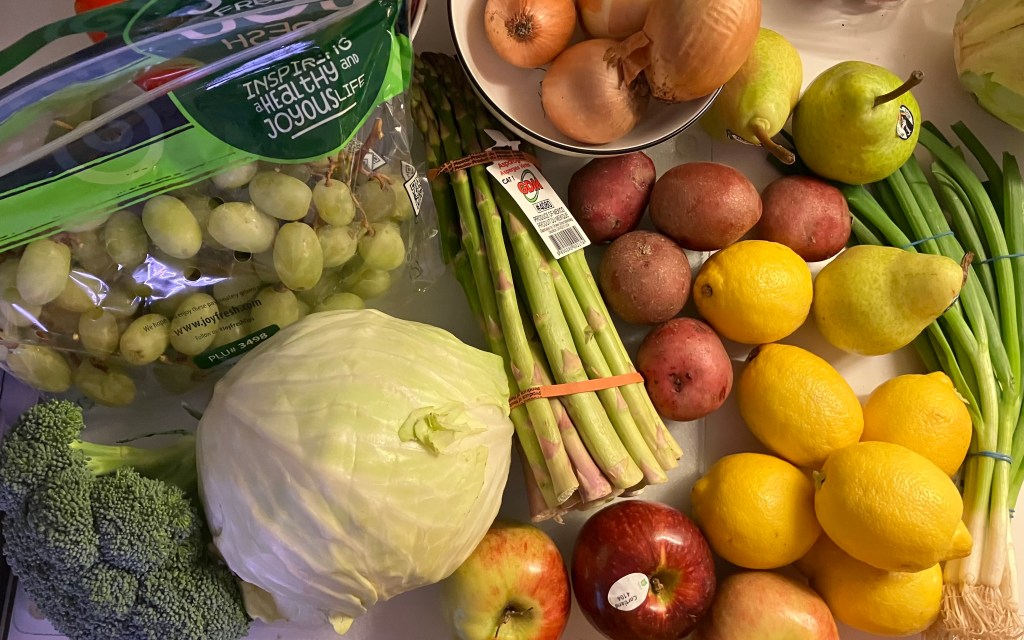
A trigger for this shift was signing up for an Odd Bunch delivery service. Each week I get a box delivered of mixed fruits and vegetables, designed to feed one person. What I like about the service is it is distributing produce that would end up in landfills because it doesn’t meet the grading criteria to make it to the store shelf.
So I save money and get a revolving choice to plan my menu around each week. My weekly bill is $23.99 ($20 for the box, $3.99 delivery), definitely cheaper than even frugal selection at my local IGA. If you want to try it out, you can use my referral link and save 20% on your first order.
Is it working?
Over the last month, I’ve seen the scale start to climb by 3-5 pounds and at first I was confused, because I hadn’t changed my diet or my activity level to a noticeable degree. Treatment and metabolism are so closely linked that I didn’t know whether this was an after-effect to be concerned about. But then I talked with both my regular doctor and my oncologist as we were reviewing test results and they both agreed the weight gain is something to be celebrated.
It was my regular doctor who first suggested that it was likely due to my body resetting itself after the rigors of treatment, and learning that it can direct it’s energy to muscle creation instead of managing the harsh effects of treatment. My oncologist backed him up when we spoke this week. She was encouraged because a side-effect of pelvic radiation can be malabsorption issues, and putting on weight is a good sign that I don’t have to concern myself with that.
So for now, I’m staying the course and slowly rebuilding my fitness. I’ll see my oncologist again for scans in August or September, and I hope by then to have a 10k race under my belt as well.
 Running from hysteria
Leave a comment